Why Waymo Fails Humanity: A Cab or ShareRide celebrates story telling.

Waymo Stalling in San Francisco

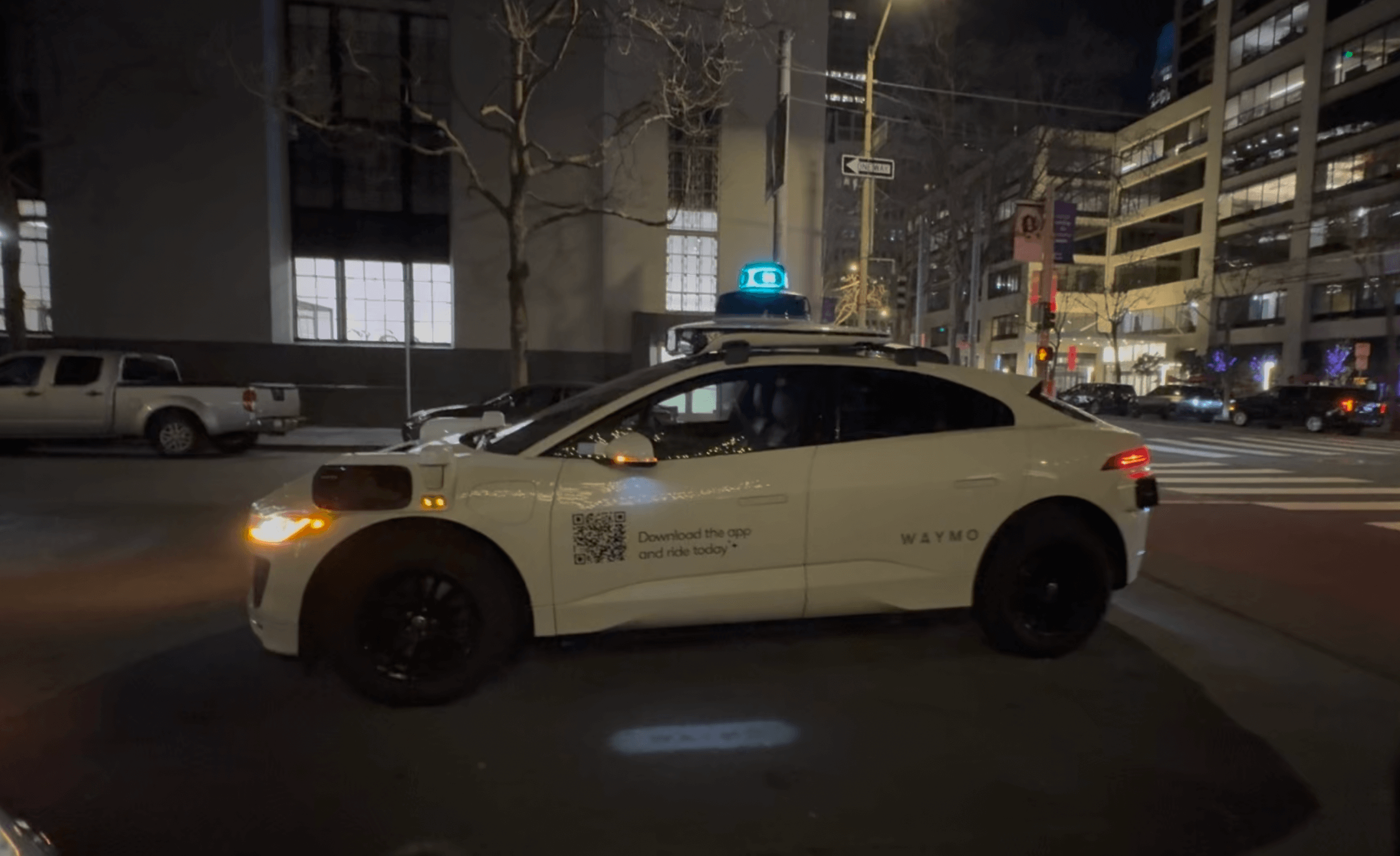
This WAYMO sat outside Boulevard Restaurant in San Francisco for 20mins on Feb 5, 2026. Photo by Marc Phillips

Meanwhile, Waymo is reportedly approaching a $110 billion valuation after raising $16 billion in fresh capital, according to the Financial Times. Investors including Sequoia Capital, Dragoneer Investment Group and DST Global are backing its rapid expansion across the United States and into international markets.

At the same time, Tesla is accelerating its own robotaxi ambitions. From a financial and technological standpoint, autonomous vehicles represent significant progress. However, an important social dimension of transportation is being overlooked.

1. Transportation Has Always Been Social

Human beings are wired to exchange stories, share information and connect with strangers. A taxi ride has historically been more than simple transportation. It has provided a small but meaningful opportunity for human interaction.

Passengers often ask drivers about local restaurants, neighbourhood changes or traffic conditions. Drivers frequently share insights, experiences and observations about the city. Even when the conversation is brief, the presence of another person creates acknowledgment and connection.

Autonomous vehicles remove that possibility. When a passenger enters a driverless car, the experience becomes entirely transactional. There is no greeting, no shared moment and no informal exchange. The journey becomes a service delivered by software rather than a shared human experience.

While some riders may appreciate silence, society is already reducing face-to-face interaction through remote work and digital communication. Eliminating drivers removes yet another everyday point of connection.

2. Real-World Conditions Require Human Judgment

Beyond conversation, there is a practical issue that becomes visible in imperfect traffic conditions. Real streets are unpredictable. It may be raining heavily. A vehicle could be broken down near the pickup point. Traffic congestion might block safe access. A passenger may need to cross a busy road and hesitate.

A human driver interprets these situations instinctively. The driver can make eye contact, signal reassurance, reposition the car into a driveway or adjust slightly to make entry safer. These micro-decisions are based on context and judgment, not strict programming.

An autonomous vehicle operates differently. It follows mapped pickup locations and predefined safety protocols. If circumstances change, the system does not improvise in the same way a person can. The absence of a driver means there is no shared visual confirmation or verbal coordination. Minor issues can become prolonged delays simply because there is no human available to interpret nuance.

3. Efficiency Is Not the Same as Progress

Waymo’s valuation reflects investor confidence in autonomy’s economic potential. Reduced labour costs, scalable fleets and consistent performance are compelling arguments. From an operational standpoint, the technology works.

However, progress should not be measured solely by financial returns or engineering milestones. It should also consider how systems shape human behaviour and social experience. When we remove drivers from taxis, we do not simply remove labour. We remove interaction, adaptability and informal communication.

Human beings were built to connect. Even small exchanges reinforce social cohesion. A cab ride has traditionally offered a brief but meaningful arena for that exchange. As autonomous fleets expand, the question is not whether the vehicles can drive safely.

The question is whether eliminating everyday human interactions truly represents advancement, or whether it quietly diminishes something essential.

What David Beckham can learn from Rank Brain

Yesterday in New York City, the team got together for a late lunch at Balthazar for a steak and chips. Simple no fuss. Until the David Beckham circus arrived along with paparazzi and disturbed a casual late lunch for all those dining. We were told that Beckham phoned ahead signalling the photographers to crush the diners trying to get in and out. That’s technically off line spamming.

If “Becks” understood Google rank brain, he would have already realized that it would have been better to slide into the restaurant with a pair of loafers and shades surprising diners who would have surely taken photos and shared them on social media. Let Google’s new machine learning and artificial intelligence algorithm take hold of the # hashtags and geo-locations of phones used to take pictures to promote presence on social media.

Fortunately, we were able to find some good Cannoli in Little Italy.

IMG_6145


Are Algorithms laundering data?

The core of SearchForecast is analyzing data. Every day, our team is analyzing Google Analytics, conversion data, CRM data  and email campaign metrics. We provide insights from this data, using our experience learned from client work. Cathy O’Neil has a very insightful TED talk here on algorithms. We too warn clients not to seed emotional input into algorithms as this can have and does have negative effects. This is worth watching if you’re providing solutions with data.

When one door closes, another one opens

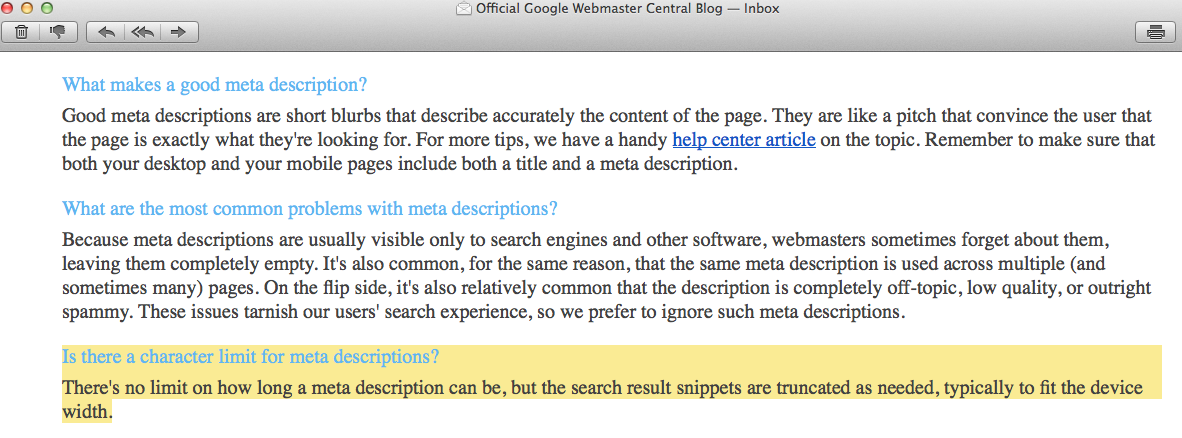
Famous words from a famous film! RIP DMOZ. You inspired SearchForecast to be founded. For the record, SearchForecast has always known the meta description tag need not be exact on characters as Google often shortens the sentence. Here is the proof from the Google Webmaster Tools Blog dated 2nd June 2017. Screenshot attached or long form at https://webmasters.googleblog.com/2017/06/better-snippets-for-your-users.html

Screen Shot 2017-06-04 at 7.54.03 PM


15 per cent Daily new searches on Google

Crazy to think that “15 percent of searches we [Google] see every day are new” as cited in https://blog.google/products/search/our-latest-quality-improvements-search

That’s 1 in 7 searches. If you apply the Pareto principle (also known as the 80/20 rule) where roughly 80% of the effects come from 20% of the causes, then there is serious work to do understanding the intent of these new words and effect on client leads, conversions, etc.

Action Point: Get to work analyzing new keywords!

Screen Shot 2017-04-26 at 12.40.48 AM

I don’t need Google

From all of us at SearchForecast who spend days and weeks deconstructing search engine algorithm updates by Google (from Penguin to Possum this week), thank you to the person who sent us this. I would only say that finding one that says ‘My husband knows everything’ is certainly worthy as many of our clients and co-workers are quite sure about this as well as the gentleman referring to their wives!

Screen Shot 2016-09-23 at 8.59.38 PM


The Last Emotion Technique to Reduce Exit Page Traffic

While all digital marketers focus on driving traffic to their websites and apps, content marketers pine over sticky content and engagement metrics, the retention of visitors from exit pages is relatively overlooked. Customer success managers use tools to evaluate when subscribers will churn and give them some TLC yet the simple metric of reducing exit page traffic is the first step for all digital properties to stop the exodus of unsatisfied users.

A good 404 error page design and or unsubscribe page is important as it’s often the last emotion your exiting users feel. A great example is Ozy.com down in Mountain View when I did think well of them as I unsubscribed from their daily email this morning. My after thoughts were positive of them as they did provide a lasting emotional outreach during the exit process. While all website and app visitors wont be sticky, ensuring a positive parting emotion online is a key branding requirement.

IMG_5853

Webinar: Optimizing A Silicon Valley Unicorn Company Website

On 19th of April, Marc Phillips, Director of SearchForecast overviewed the working methodology of how ZScaler.com was optimized in a webinar. ZScaler is a unicorn technology company based in Silicon Valley having raised over $150M at a $1+ billion valuation. In 2012/2013, SearchForecast were engaged by ZScaler for 18 months to provide search engine optimization and content updates.

The original recording was corrupted on GoToWebinar.com platform. The below webinar recorded was recorded today.

Watch the Webinar on Youtube

3 to 1 for The Optimists

Our team at SearchForecast have spent hours each day over the past 20 years crunching quantitative data, looking for trend lines, inflection points or identifying patterns to uncover risk. Yet at a recent trip to the local stationary store in Menlo Park in the hub of Silicon Valley, the shop assistant said that 3 people buy the yellow smiley face ‘Emergency Affirmation’ for every one blue ‘Fail’ button.

Therein lies the underlying trend line in the world of seemingly endless bad news, optimists are 3x the pessimists.

blog

How PPC Bounce rates can kill content optimization

It doesn’t happen often and it’s unfortunate yet high bounce rates on Pay Per Click advertising can impact on content optimization. That is, web pages optimized for keywords can be negatively impacted in organic search engine results listings if there is HIGH bounce rates from pay per click advertising.

We have experienced this on several websites in 2015. It occurs when bounce rates on Google Adwords is 95% and above. To prevent SEO and content optimization efforts being adversely affected by high bounce rates on landing pages used in Adwords, follow these best practices:

1. Do not use the home page of the website as the landing page for Google Adwords

2.  Ensure Page Speed is above 80/100 for the entire website

3. Avoid excessive code errors in HTML

Comic Speech Bubble