The Future of Web Design Depends on Prompts: Lessons for the AI Website 2026 Strategy
Generative AI isn’t just transforming how people search — it’s redefining how websites must be built. The shift toward AI-driven discovery marks the arrival of the Answer Engine Optimization (AEO) era, where traditional SEO alone can no longer secure visibility. Instead, websites must be engineered to rank inside AI models, respond to natural-language prompts, and publish content in places LLMs actually look.
This changes everything about digital experience design, from navigation to content architecture to structured answers.
1. AI Has Become a Primary Discovery Surface — Even If Referral Traffic Is Still Small
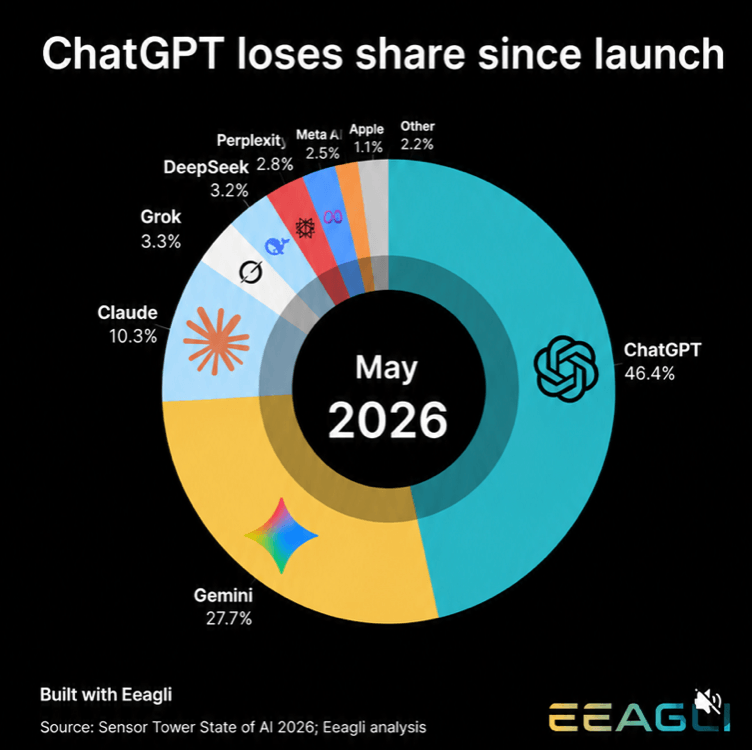
AI referral traffic is still only a small fraction of total visits — around 1.08% — but nearly 90% of that comes from ChatGPT. Even though small today, this traffic is rapidly shaping early-stage customer journeys.
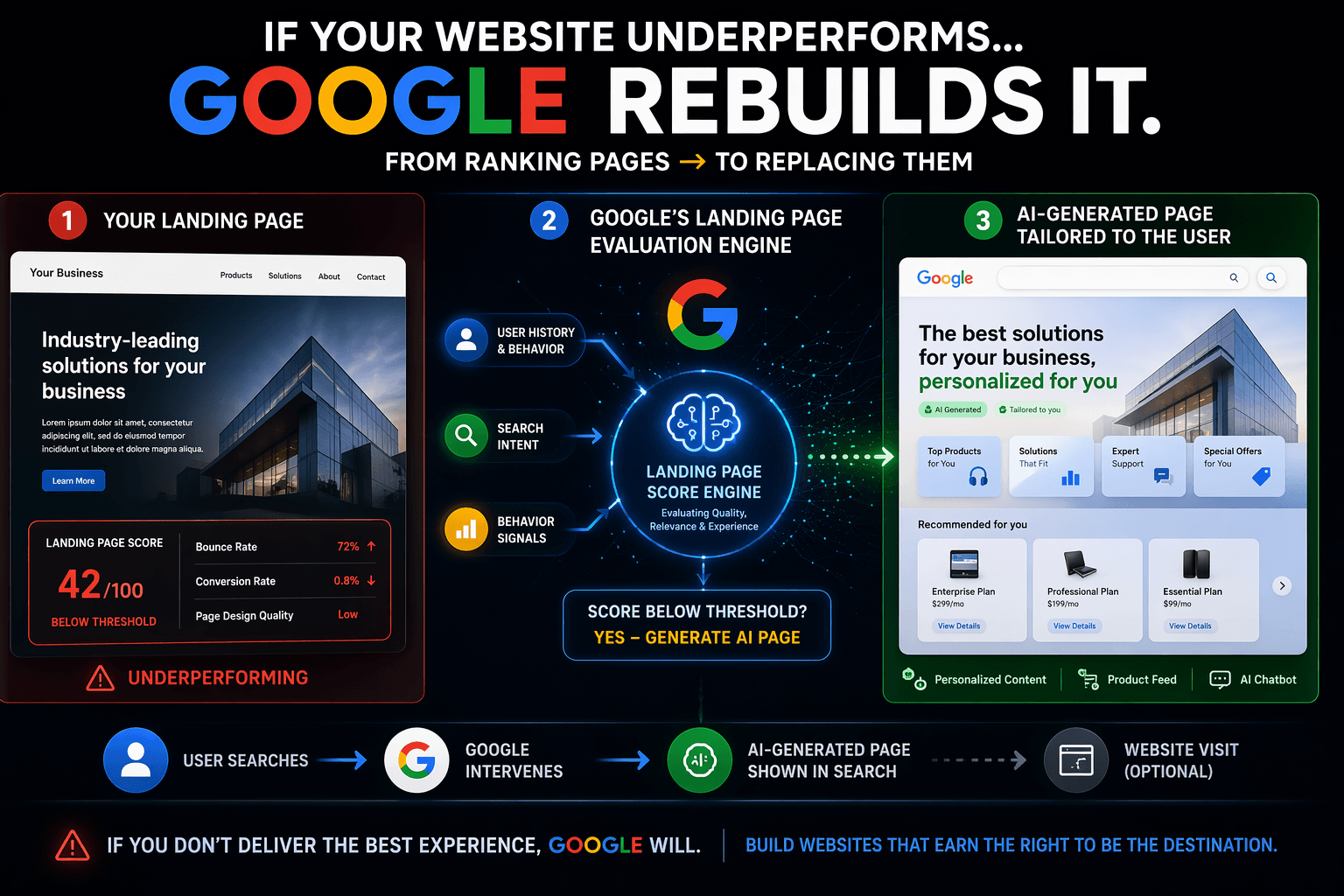
By 2026, AI Overviews will become “the page,” with 1 in 4 Google searches now replacing website clicks with AI-generated answers.
This forces brands to ask:
- What answers does AI surface about my business? And which prompts trigger them?
Website design now becomes less about creating pages and more about creating answer-readiness.
2. Prompts Are Now the Starting Point of Your Website Strategy
The modern optimization process begins not with keywords — but with the questions customers ask.
Traditionally, websites were built around product categories, navigation menus, and brand messaging. In an LLM-first world, they must be constructed around the prompts customers naturally use, such as:
- “What’s the best air purifier for allergies?”
- “How do I choose a laptop for graphic design?”
- “Which kitchen blender works best for smoothies?”
This means prompts drive:
- Your content architecture
- Your FAQ clusters
- Your semantic URL structure
- Your guides, how-to resources, and comparison content
- Your external content distribution strategy
Modern websites become answer engines, not static brochures.
3. AI Models Pull From Specific URL Patterns — and Prompt-Optimized Content Wins
“Sources & Citations” insights clearly show:
- AI models favor clear, natural-language, structured content that aligns directly with the prompt.
Key observations include:
Guides and Articles Get More Visibility
How-to guides, category explanations, and resource articles consistently appear more often in AI citations. This means websites must support answer-rich formats, not simply product listings.
Semantic URLs Increase Visibility
Conference insights show that semantic URLs increase visibility by 11.4%, reinforcing the need for URLs aligned with questions.
For example:
/best-air-purifier-for-allergies/ will typically outperform /air-purifiers/allergies/ in an AI context.
Gap Analysis Shows Prompt Intent Wins
If competitors rank for prompts like “best noise-canceling headphones,” it’s rarely a matter of quantity of content — it’s the alignment with prompt intent.
4. Prompt Volume Is the New Traffic Metric
AI Overview screenshots in the presentation show Google directly answering user prompts — without requiring a click to the website.
This leads to a major insight:
Prompt volume is the new page-view metric. Brands must optimize for inclusion in the AI answer, not just the search ranking.
To accomplish this, brands need:
- Natural-language page titles
- Conversational headers
- Snippet-ready paragraphs
- Structured Q&A for AI parsing
- Rich media like YouTube videos and user reviews
In short: write for prompts, not pages.
5. Shift Toward Prompt-Led Content
The recent Zero Click Conference insights show:
- FAQs appear 848% more often in AI responses.
- Natural language URLs deliver +17% more rankings.
- Product titles that are 18% longer perform better.
- Videos get +103% more visibility.
- Product ratings influence visibility by +36%.
These trends reflect a clear reality:
- AI prefers conversational, structured, semantically rich content — the exact format customers use in prompts.
This is why prompts must guide the entire web design process.
6. Prompt Mapping
Identify the top 50–100 prompts customers ask and use them as your content blueprint and then
A. Publish Content Where AI Looks
Google Reviews, YouTube, Reddit, LinkedIn, community Q&A, and UGC platforms are now key sources that LLMs incorporate.
B. Scientific Experimentation
Publish prompt-based content → measure → adjust → re-measure.
Website design becomes iterative and data-driven.
Prompts Are the New Blueprint for Website Design
The era of designing websites around category trees and navigation menus is ending.
We have entered the Prompt-First Web, where:
- Customers ask questions
- AI answers them
- Websites must supply the source material for those answers
- Visibility depends on semantic clarity and prompt alignment
To win in 2026 and beyond, brands must build websites where every page is designed to answer a question — because prompts are now the gateway to discovery, relevance, and conversions.