
ChatGPT Hits 1 Billion Weekly Users : How Do I index inside Generative AI Apps?

For over two decades, businesses focused on ranking in Google search results. Success was measured by website traffic, rankings, and clicks. Today, millions of consumers are bypassing traditional search engines and asking questions directly to AI assistants such as ChatGPT, Gemini, Claude, and Perplexity. Instead of receivinga list of links, users receive a complete answer generated from multiple sources across the web.

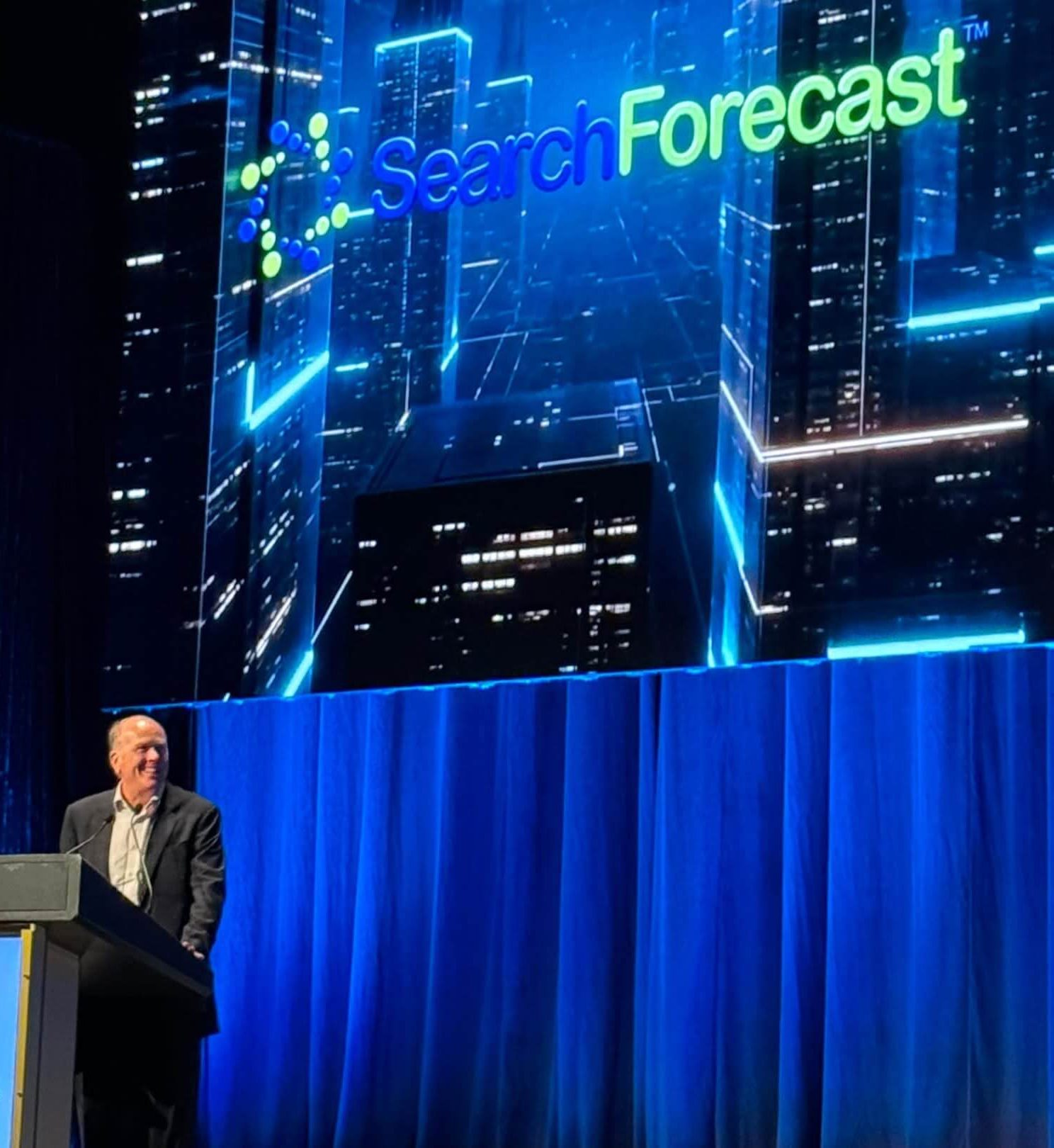
At a recent conference, Marc Phillips, CEO of SearchForecast spoke about how this change creates both challenges and opportunities for website publishers.
marc-phillips-searchforecast

The challenge is that users may no longer need to click through to a website to find an answer. AI platforms increasingly summarize information directly within the conversation. As a result, businesses that rely solely on traditional SEO strategies may see changes in how users discover their content.

The opportunity is that websites can now become sources cited and referenced by AI systems. When ChatGPT recommends a company, references an article, or cites an expert source, that visibility can influence purchasing decisions, brand awareness, and lead generation at an unprecedented scale.

This is where a new discipline known as Answer Engine Optimization (AEO) and Generative Engine Optimization (GEO) becomes critical. Rather than optimizing only for search engine rankings, businesses must optimize their websites so AI platforms can understand, trust, and reference their content. Research has shown that GEO strategies can significantly increase the visibility of content within AI-generated responses.

At SearchForecast, we help businesses adapt to this new reality through AI Optimization services that extend beyond traditional SEO. The company provides SEO, AEO, and GEO strategies designed to increase visibility within ChatGPT, Google AI Overviews, Gemini, Perplexity, and other emerging AI platforms. These services focus on improving content structure, authority signals, schema markup, entity optimization, citation opportunities, and machine-readable content that AI systems can confidently reference.

For website publishers, the message is clear. The internet is entering a new era where visibility is no longer determined solely by rankings on a search results page. Increasingly, success will be measured by whether your content is included in the answers generated by AI.

ChatGPT reaching one billion users is not simply another technology headline. It is evidence that AI-powered discovery has entered the mainstream. Businesses that invest now in AI Optimization, Answer Engine Optimization, and Generative Engine Optimization will be better positioned to capture visibility, authority, and customers in the years ahead.

The future of digital marketing is no longer just about being found in search. It is about being referenced in the answer.

Impact of AI Overviews on Organic Search Results

A lot of noise about the impact of Google AI Overviews on traditional search results. According to Ahrefs, the #1 organic result has lost around 34% of its clicks when an AI Overview appears. Sounds fair. We can all see AI Overviews on search results pages. They are summaries sourced from various websites so are largely informational and very useful for most queries seeking an answer to a question.

Its worth noting that some sectors have more AI Overviews than others. For instance, health care search queries have more AI Overviews than retail.

According to a study by Adthena in July 2025, 1 to 4 keyword search queries in the retail sector across search engines trigger an AI overview not more than 8.5% of all search results. The longer the search query the more often search engines results pages include an AI Overview (AIO).

The Bottomline. Depending on the industry and type of search query will depend on what % of times an AI Overview appears in search results pages.

Designing ‘Prompt’ First Websites

The Future of Web Design Depends on Prompts: Lessons for the AI Website 2026 Strategy

Generative AI isn’t just transforming how people search — it’s redefining how websites must be built. The shift toward AI-driven discovery marks the arrival of the Answer Engine Optimization (AEO) era, where traditional SEO alone can no longer secure visibility. Instead, websites must be engineered to rank inside AI models, respond to natural-language prompts, and publish content in places LLMs actually look.

This changes everything about digital experience design, from navigation to content architecture to structured answers.

1. AI Has Become a Primary Discovery Surface — Even If Referral Traffic Is Still Small

AI referral traffic is still only a small fraction of total visits — around 1.08% — but nearly 90% of that comes from ChatGPT. Even though small today, this traffic is rapidly shaping early-stage customer journeys.

By 2026, AI Overviews will become “the page,” with 1 in 4 Google searches now replacing website clicks with AI-generated answers.

This forces brands to ask:

  • What answers does AI surface about my business? And which prompts trigger them?

Website design now becomes less about creating pages and more about creating answer-readiness.

2. Prompts Are Now the Starting Point of Your Website Strategy

The modern optimization process begins not with keywords — but with the questions customers ask.

Traditionally, websites were built around product categories, navigation menus, and brand messaging. In an LLM-first world, they must be constructed around the prompts customers naturally use, such as:

  • “What’s the best air purifier for allergies?”
  • “How do I choose a laptop for graphic design?”
  • “Which kitchen blender works best for smoothies?”

This means prompts drive:

  • Your content architecture
  • Your FAQ clusters
  • Your semantic URL structure
  • Your guides, how-to resources, and comparison content
  • Your external content distribution strategy

Modern websites become answer engines, not static brochures.

3. AI Models Pull From Specific URL Patterns — and Prompt-Optimized Content Wins

“Sources & Citations” insights clearly show:

  • AI models favor clear, natural-language, structured content that aligns directly with the prompt.

Key observations include:

Guides and Articles Get More Visibility

How-to guides, category explanations, and resource articles consistently appear more often in AI citations. This means websites must support answer-rich formats, not simply product listings.

Semantic URLs Increase Visibility

Conference insights show that semantic URLs increase visibility by 11.4%, reinforcing the need for URLs aligned with questions.

For example:

  • /best-air-purifier-for-allergies/ will typically outperform /air-purifiers/allergies/ in an AI context.

Gap Analysis Shows Prompt Intent Wins

If competitors rank for prompts like “best noise-canceling headphones,” it’s rarely a matter of quantity of content — it’s the alignment with prompt intent.

4. Prompt Volume Is the New Traffic Metric

AI Overview screenshots in the presentation show Google directly answering user prompts — without requiring a click to the website.

This leads to a major insight:

Prompt volume is the new page-view metric. Brands must optimize for inclusion in the AI answer, not just the search ranking.

To accomplish this, brands need:

  • Natural-language page titles
  • Conversational headers
  • Snippet-ready paragraphs
  • Structured Q&A for AI parsing
  • Rich media like YouTube videos and user reviews

In short: write for prompts, not pages.

5. Shift Toward Prompt-Led Content

The recent Zero Click Conference insights show:

  • FAQs appear 848% more often in AI responses.
  • Natural language URLs deliver +17% more rankings.
  • Product titles that are 18% longer perform better.
  • Videos get +103% more visibility.
  • Product ratings influence visibility by +36%.

These trends reflect a clear reality:

  • AI prefers conversational, structured, semantically rich content — the exact format customers use in prompts.

This is why prompts must guide the entire web design process.

6. Prompt Mapping

Identify the top 50–100 prompts customers ask and use them as your content blueprint and then

A. Publish Content Where AI Looks

Google Reviews, YouTube, Reddit, LinkedIn, community Q&A, and UGC platforms are now key sources that LLMs incorporate.

B. Scientific Experimentation

Publish prompt-based content → measure → adjust → re-measure.
Website design becomes iterative and data-driven.

Prompts Are the New Blueprint for Website Design

The era of designing websites around category trees and navigation menus is ending.

We have entered the Prompt-First Web, where:

  • Customers ask questions
  • AI answers them
  • Websites must supply the source material for those answers
  • Visibility depends on semantic clarity and prompt alignment

To win in 2026 and beyond, brands must build websites where every page is designed to answer a question — because prompts are now the gateway to discovery, relevance, and conversions.

Continue reading

Comparison SEO for AI

In a world where Google & Bing Overviews AI are more prominent on search results pages, providing comparison tables of products will assist in SEO.

Comparative charts can potentially leading to rich snippets in search results and there is also an argument that these comparative charts becuase they are structured content is more easily digestible for voice assistants, improving the chances of being featured in voice search answers such as when using Siri on iPhone.

Comparison SEO is an essential strategy for eCommerce sites, affiliate marketers, and content publishers aiming to attract purchase-ready users. It focuses on optimizing content for high-intent keywords like ‘X vs Y’ or ‘best [product category],’ helping shoppers evaluate their options quickly and confidently.

Here’s a few examples from the US retail market across car parts, tennis racquets, and homewares.

Car Parts: Brake Pads
When drivers need to replace brake pads, they often search for terms like ‘best ceramic brake pads’ or compare top brands. By showcasing side-by-side features such as material type, warranty, and price, a well-optimized comparison table can directly influence buyer choices.

Tennis Racquets for Intermediate Players
Tennis players looking to upgrade their gear often compare racquets based on weight, string pattern, and brand reputation. Comparison tables not only aid in decision-making but also attract traffic from search terms like ‘Wilson vs Babolat racquet.’

Homewares: Blenders
For everyday consumers browsing high-ticket appliances like blenders, side-by-side product comparisons help visualize the difference between a $99 Ninja and a $449 Vitamix. Well-crafted SEO content based on such tables targets terms like ‘best blender under $500’ and drives conversions.

Comparison SEO works because it aligns with how people search when making buying decisions. Clear product differences, organized tables, and value-driven content make it easy for users to act—and for websites to convert traffic into sales. Whether you’re in automotive, sporting goods, or homewares, comparison content is a powerful tool.

Is Conversational AI a knock out punch for SEO?

Google’s Search Generative Experience (SGE) has a more conversational feel to it. Questions appear below answers and the results page is more interactive, feels more intuitive and simulating a human response – which is after all what Artificial Intelligence does.

It’s a given now in Silicon Valley that conversational agents are expected to replace traditional software UIs, creating more human and natural interactions. And that includes the results pages for search engines. Now that might seem like a knock out punch for organic rankings and fulfil Google’s shareholder dreams to monetize the entire page with paid ads yet hold on amigo! We’re not done yet as the lifeblood of Google’s search engine is the functionality of being able to find relevant, third party information.

Google’s Search Generative Experience isn’t working to everyone’s satisfaction as we can see below! So it will take some time for Google and Bing to fully roll out correct versions of thier AI search products. That might take many years.

When Marc Phillips spoke to several hundred retailers recently at a conference, it was obvious that AI was still nascent for most business folks outside of technology, education and information services fields. Not every industry is drinking the Kool Aid of AI outside of Silicon Valley! Sure, AI is transformative yet as one store owner commented ‘AI sure isn’t going to sell products on the showroom floor to my customers’.

Perhaps the best advice is for everyone to use AI in different applications as it’s early days and change is the only constant right now in the AI world.

Will Google OutPrompt ChatGPT?

I think so. Here’s how… it starts in September 2016 when Goolge buys venture funded start up called API.AI which provides tools to developers building apps for Google’s virtual assistant. They tweak it and rename it “Dialogflow” and since 2018, it is part of Google Cloud Platform.

Create your own Generative AI agent EASILY

So now Google has just made it so easy to create a Generative AI chatbot in literally just a few clicks using Vertex AI Conversation and Dialogflow. ALl you have to do is connect your webpage or documents to your Dialogflow CX agent and leverage large language models for generating responses from the content, out of the box!

You can also call a large language model to perform specific tasks during a virtual agent conversation or respond to a query contextually, significantly reducing development effort and making virtual agents more conversational.

We did this for a client recently using Vertex AI App Builder and Dialogflow. It then generates a small pieced of Javascript that you can paste into a container and it appears on your website. Remind you of YouTube embed code or Google Analytics, or AdSense. Oh yeah, those products worked out pretty well for Google to scale global distribution amongst publishers. It’s the distribution piece that Open AI / ChatGPT need to play catch up on Google.

I just don’t think they can catch Google, particularly when they start leveraging their $220B revenue per year from Adwords that allows them to give Cloud products like Dialogflow and Vertex AI App Builder away for free! And when they start integrating this all into Google Analytics, Adwords, etc, etc. The network effect Google has is a potential road kill for ChatGPT.

Google Vs AI

We were skeptical about Microsoft’s claims that 40% of people using Google don’t find what they are looking for. This was a throw away statistic they quoted when announcing that they had incorporated AI into Bing.com search functionality. SEMRush has come out with research that found:

A) 10% of people click through to other Google properties (GMB, shopping or images)

B) 18% refine what they are searching for by using another keyword.

C) 25% Zero-click searches meaning they stay on Google results page and then exit.*

The point here is that 1/4 of people searching on Google find what they are looking for after 1 search query and then do not need to go further. All stats (including Google’s ad revenue) show they have been sending more traffic to the open web every year. So the fact is that Google does provide users with the answer and they don’t just exit the search engine.

And. In every SpyFu competitor analysis of the number of SEO keywords and monthly SEO clicks that websites receive in the past 6-9 months, we’re seeing declines resulting from the Google Algorithm Core Update on September 2022 and Helpful Content Update in December 2022. See chart below. So, what does this mean? It means Google are ripping on ChatGPT and Generative AI content production.

The bottom line is that just because you can use ChatGPT or tools like Jasper.Ai and other content tools, the mass production of content isn’t going to make it to page 1 of Google. Another way of saying this is you get nothing for nothing in this world. Just ask the crypto fanatics who spiked that ball for the past 5 years!