
Price Optimization Fundamental for Retail SEO

We are fortunate to see an incredible amount of insights into very large retail website sales volumes and what drives their conversions. I’m talking websites for $150+ million annual sales. At that scale, you notice trends and can deduce insights on how Google’s algorithm works.

As we know there is no rule book for optimizing for Google’s organic results yet there’s a lot of best practice. We’ve witnessed first hand how just by changing prices (I should say, reducing prices) for products that already have indexation in Google these product URLs will appear higher in the results pages.

When SearchForecast started optimizing webpages in 2002 in Google, we could see updated URLs with keywords, Title Tag and Description Meta Tags in Google search results pages being re-indexed very quickly. Usually within 2-3 days. The same is now happening with price.

More than that. Google are now creating seller pricing matrix with pricing inside the Knowledge Graph. They aren’t doing it on all products in all industries but we see it appearing often.

Having studied micro-economics at University of Melbourne, I am well aware of the optimal price models. Put simply, Google are now using this type of logic in their organic results. You don’t have to be Einstein to figure out that lower prices or products which change prices more often are going to increase the propensity for a consumer to buy (and hence, click on a link). And that click is what Google want and reward websites with higher organic listings in their search engine results pages.

Google Takes Gloves off in Fight Against Amazon Product Search

So you’re stuck at home during Covid-19 lockdown / shelter and realize you need some board games for the kids to play with. So do go to Google or Amazon. You know Google shows products under the Shopping Tab and yet Amazon has everything as well right? That split second decision is worth hundreds of billions to both companies as they fight for consumers to visit their website to discover, browse, search and ultimately buy.

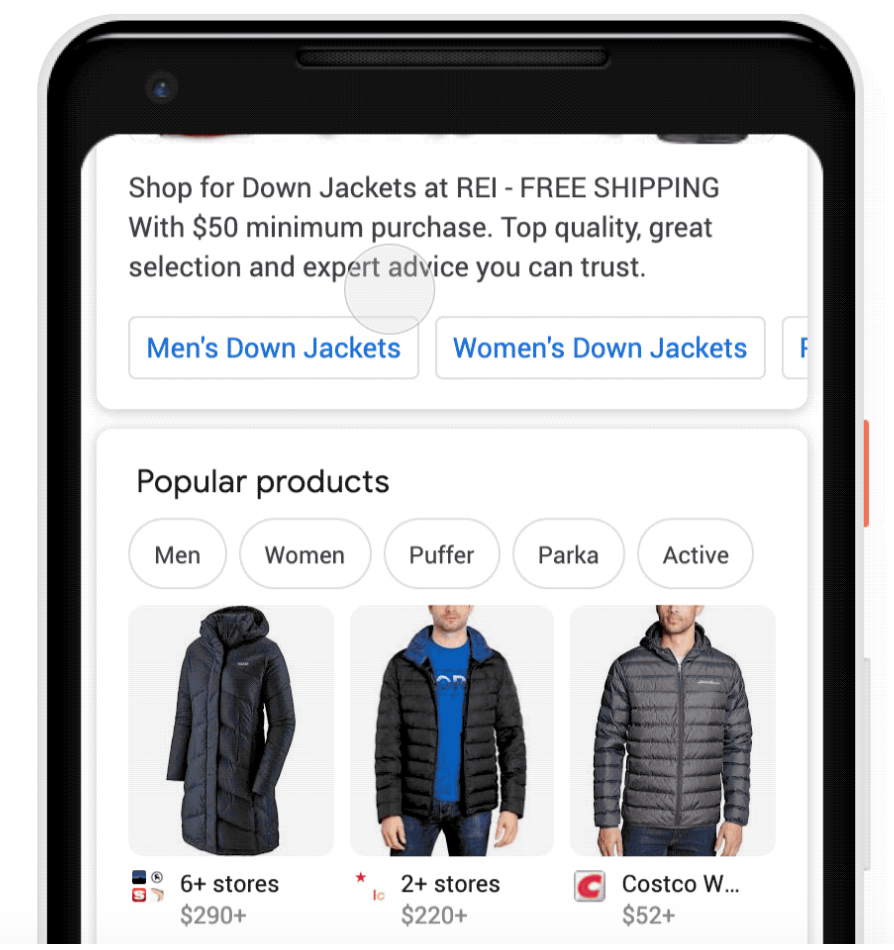
Up until April 2020, Google allowed product data feeds to be uploaded to their Google Merchant Center and advertised at a cost. These would appear as Sponsored Shopping Ads on Google. Then in January 2020, Google announced that products in some categories (shoes, apparel, accessories) would eligible for display in results on Search and Google Images for FREE. That’s right ‘organic listings’ which they put under a ‘Popular Products’ tab – see below.

popular-products

Why is this a BIG DEAL?

Because Google want the all product brands and manufacturers to upload their products to their Google Merchant Center to fight Amazon, the largest online marketplace in the world. Amazon is able to monetize their traffic not only by taking a percentage transaction fee on each product sold, warehoused and delivered but also on the data collected via their advertising search platform.

If you are advertising on Amazon, you should review dash / APPLICATIONS. Built by Amazon ex-employees, the software include data studio, advertising studio and inventory planning, all of which help you sell more on Amazon.